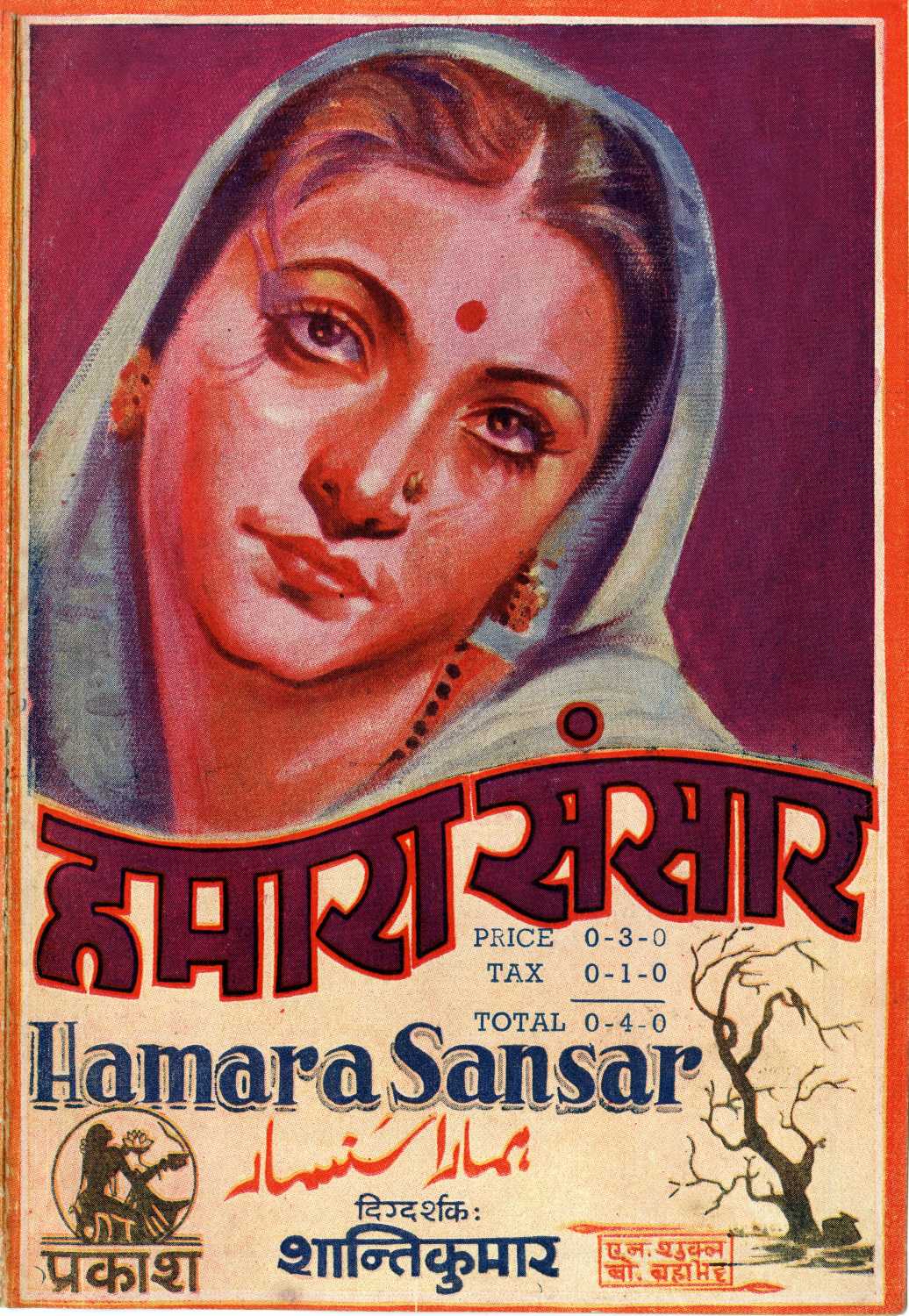
Song-Veer abhimaan se badhta hua shaan se (Taramati)(1945) Singer – Baby Shakuntala, Lyricist ... Today's song is from an obscure film Hamara Sansar-45.
Directed by Shanti Kumar, Hindi movie Hamara Sansar stars Umakant and Rajkumari Shukla in the lead role. Know the full star cast of Hamara Sansar film like ...
Shree Bhagwan, Actor: Saat Sawal Yane Haatim Tai. Shree Bhagwan is an actor and assistant director, known for Saat Sawal Yane Haatim Tai (1971), Zabak ...
Also known as: Shribhagwan, Shri Bhagvan, Sri Bhagwan. Air Mail 1960 Aladdin Aur Jaadui Chiraag 1952. Artworks; Filmography. Showing 51 Films, from 567 ...
ACTORS:- Bhagwan Sinha;Bhagwaan Dada;Shree Bhagwan; M. Bhagwandas ... Bhagwan Sinha is an actor, known for Sholay (1975), Kismat (1969) and Dev ... Sri Krishna Bhagwan, known popularly as S. K. Bhagavan, is an Indian film ...
Other names, Jilloobai, Jillo, Jillobai, Jillo Bai, Jilloo Bai, Zillu, Zilloo, Zilloobai, Miss Jillo, Miss Jilloo, Miss Tilloo. Occupation, Actress, singer. Years active, 1924-1960.
Notable work. Alam Ara · Mother India · Mughal-e-Azam. Jilloo was an
Indian Bollywood actress born in 1905 in Bombay, India as Zuleka
Ebrahain.
Jilloo
was an Indian Bollywood actress born in 1905 in Bombay, India as Zuleka
Ebrahain. She acted in Mother India and Mughal-e-Azam, the two biggest
commercial and critical successes of the 1950s. She also acted in many
movies also, but in very small roles.Wikipedia
Tikaram complete movie(s) list from 1952 to 1952 all inclusive: Actor with release dates, trailers and ... Exclusive complied list with movies like Baiju Bawra (1952)
Check out the latest movie review, trailers, story, plot, music videos, songs, wallpapers, cast and crew details of Hamara Sansar hindi movie on Gomolo.com.
Provided to YouTube by Sa Re Ga Ma Kaun Jeevan Mein Mere · Zohra Ambala Hamara Sansar ℗ Saregama India Ltd Released ...
kaun jivan me mere samaye ja raha hai - (2)
kaun mann pe mere chhaye ja raha hai
kaun jivan me mere samaye ja raha hai
kaun barakha kee kalee kalee rat me - (2)
ban ke saya chal raha hai sath me - (2)
kaun dipak ban ke rah dikhala raha hai
kaun jivan me mere samaye ja raha hai - (2)
koyee sathee naa tha koyee mit naa tha - (2)
mere sunee vina me koyee git naa tha - (2)
kaun mithe suro se yeh gaye ja raha hai - (2)
kaun mann ko mere lubhaye ja raha hai - (2)
Director: Shanti Kumar Writer: Girish Pandit Cast Jeevan Jeevan ... Munshiji / Kailash Ranjana Ranjana ... Shanti Umakant ... ae dil-e-nakaam ab
dil ki tamanna chhod de
ae dil-e-nakaam ab
dil ki tamanna chhod de
apne armano ki duniya
ke minare tod de
ae dil-e-nakaam ab
dil ki tamanna chhod de
apne begane hue
jin par ke tujhko naaz tha
apne begane hue
jin par ke tujhko naaz tha
saaf dil tha tu magar
kuch tere dil me raaz tha
matlabi duniya pe tu
aitbaar lana chhod de
aitbaar lana chhod de
ae dil-e-nakaam ab
dil ki tamanna chhod de
bharosa chhod de kal ka
bharosa chhod de kal ka
mita de aarzu dil ki
takaza hai ye kismat ka
chala chal raah manzil ki
chala chal raah manzil ki
jinko hai kal ka bharosa
unko kal par chhod de
ae dil-e-nakaam ab
dil ki tamanna chhod de
hum kis'se karen shiqwa
rona hai muqaddar mein
hum kis'se karen shiqwa
rona hai muqaddar mein
kashti bahi jaati hai
toofaanon ke manjar mein
kashti bahi jaati hai
toofaanon ke manjar mein
hum kis'se karen shikwa
rona hai muqaddar mein
har taraf mere chhaayi hai
gham ki ghata kali
har taraf mere chhaayi hai
gham ki ghat kali
armaanon bhari duniya
kismat ne mita daali
armaanon bhari duniya
kismat ne mita daali
dil toot gaya mera
bas ek hi thokar mein
gulzaar e chaman n n n n n
ab to
ujda nazar aata hai
hai ae ae ae
gulzaar e chaman n n n
ab to
ujda nazar aata hai
ummeedon ke nakshe par
parda nazar aata hai
ummeedon ke nakshe par
parda nazar aata hai
mallaah bhi kehta hai
toofaan hai samandar mein
mallaah bhi kehta hai
toofaan hai samandar mein
kashti bahi jaati hai
toofaanon ke manjar mein
hum kis'se karen shiqwa
rona hai muqaddar mein
For more songs visit http://iseriesindia.com. choti si ek banayenge naiya
choti si ek banayenge naiya
khud hi banenge uske khiwaiya
khud hi banenge uske khiwaiya
lekar paar jayenge
hum lekar paar jayenge
choti si ek banayenge naiya
choti si ek banayenge naiya
jab naiya tumhari aake bhawar me
khayegi hachkaule
jab naiya tumhari aake bhawar me
khayegi hachkaule
nahi hum paar lagayenge
nahi hum paar lagayenge
hum royenge dil leke
pyar se tumhe bulayenge
ha pyar se tumhe bulayenge
sunke ae ae madhur madhur si boli
sunke ae ae madhur madhur si boli
phir to hum daude aayenge
phir to hum daude aayenge
tairna hame sihka do
tairna hame sihka do
pahle ek baat bata do
pahle ek baat bata do, kya
ruth mat jana hamse
ruth mat jana hamse
hum tumhe nahi manayenge
mai pal pal panth niharu
mai pal pal panth niharu
aao man mandir ke sathi
aao man mandir ke sathi
asuwan paanv pakaaru
mai pal pal panth niharu
mai pal pal panth niharu
kab darshan dikhlaoge
prabhu kab darshan dikhlaoge
prabhu kab tak tumhe pukaru
mai pal pal panth niharu
mai pal pal panth niharu
New post on Atul’s Song A Day- A choice collection of Hindi Film & Non-Film Songs
Film
Hamara Sansar-45 was directed by Dr. Shanti Kumar - not to be confused
with Music Director Shanti Kumar Desai. In spite of several attempts, I
could not get any information on this director since about 8 years.
Film's music was given by Pt. Gobind Ram, who was one of the major
composers from among the Punjabi school of film composers in the 40s.
His songs did not have exactly the Punjabi rhythm, but the style was
exclusively Punjabi. His songs were sweet to ears. The cast of the film
was Jeevan, Ranjana, Sumati Gupte, Jilloo, Umakant, Rajkumari Shukla,
Susheel Kumar and many more.
When
the film industry started growing, in the initial stage there were very
few film making centres. By 1931, they were Calcutta, Bombay, Madras,
Lahore and Kolhapur. It was but natural that in Calcutta, most artistes
and technicians were Bengali. Nearby states like Assam, Dhaka,Orissa and
Bihar also supplied manpower. Similarly in Madras, Tamilians,
Andhrites, Kannada and Malayalam people were more in the industry. In
Lahore, Muslims, Punjabis and Sindhis worked in films there.
In
Bombay, two communities - Marathi and Gujarati played prominent roles
in this growing industry. Bombay being the ' Mayanagari' which provided
work to everybody and anybody, who was ready to do work, no wonder
people from every corner of India gathered here. Take the case of
India's first Talkie film Aalam Ara-1931. The producer and the
screenplay writer-Ardeshir Irani, as well as the Music Director
Phirozshah Mistry were Parsees, Dialogue writer Joseph David Penkar was a
Bene Israeli Jew from Coastal area of Konkan, Hero Master Vithal was
from Kolhapur of Maharashtra, Heroine Zubeida was from Gujarat, Jilloo
was a tawayaf from Delhi, Prithviraj Kapoor was from Peshawar, W M Khan
was from Western Frontier area, Jagdish Sethi was from Punjab, Elizer
was from Tamilnadu, L V Prasad was from Andhra and Omkar Devaskar was
from Madhya Pradesh.
However,
the financial strings of film industry were in the hands of Gujarati
people (including Parsees) and the actual work of acting, direction,
music, singing, make up, costume and other technical aspects were done
mostly by Marathi people. As the times moved on, the regional film
centres anf films became stronger enough to provide opportunities to
artistes etc and Marathi, South and others' participation in Bombay
became thinner. However, on and off Marathi artistes kept on coming to
Hindi films in various departments-mainly acting and music. One such
artiste was Sumati Gupte, about whom, hardly any information is
available in English or Hindi books or on internet sites. For the first
time, here are her details, for our readers.
Sumati
Gupte was born on 11-5-1918 in a small town, Vai, in Satara District of
Maharashtra. However, her education took place in Baroda, Gujarat, from
where she completed her graduation and obtained B.A. degree. She was
keen to work in films.
She
joined Prabhat Film company to work in its Bilingual film Sant
Dnyaaneshwar-40. The film was released on 21-5-1940 in Central cinema,
Bombay. It became a hit film. She sang 2 songs also in this film. She
started getting film offers in Marathi. She acted in several films like
Thoratanchi kamala, Navardeo and Chimukala Sansar. The last film was
directed by a young man-Vasant Joglekar. They fell in love and soon got
married in 1943. Sumati became Sumati Gupte Joglekar. In due course, the
couple had 3 daughters- Meera, Chanda and Madhushri.
Sumati
acted in many Marathi films, but at the same time she also acted in
Hindi films. She acted in Sant Dnyaneshwar-40, Sharbati Aankhen-45,
Hamara Sansar-45, Santan-46, Veer Ghatotkach-49, Nand Kishore-51, Shiv
leela-52, Samaj-54, mausi-58, Kareegar-58, Keechak Vadh-59, Waqt-65,
Pariwar-68, Adhikar-71, jalte Badan-73, Paise ki Gudiya-74, Sajjo
Rani-76 and Aadmi Sadak ka-77.
Sumati
also sang 4 songs-2 each- in film Sant Dnyaneshwar-40 and Panghat-43.
Vasant Joglekar's family had very close relationship with actor Ashok
kumar. Joglekar produced 10 films and directed 20 films. In most of
them, Ashok kumar had acted. When film Kareegar-58 was to be made, Ashok
kumar had already 30 films on hand, but he agreed to work in his film.
Ashok kumar always took only 50% fees in his films. His only condition
used to be that Sumati Gupte should bring lunch box of her cooked food
on the sets. He was very fond of her cooking. No wonder, Sumati was a
CKP by birth-a fish eater and Bangali babu liked Fish dishes very much !
Besides
films, Sumati loved to work in Marathi stage dramas. She worked in many
famous and popular dramas. The drama advertisements used to highlight
her name, to attract the audience. Sumati got many awards like Rasrang
magazine's Phalke award, V. Shantaram award and Chitrabhushan, Life time
achievement award from Maharashtra Govt.
Her
husband Vasant Joglekar died in 1993.They had tried to promote their
elder daughter Meera in Hindi films. She acted opposite Joy Mukherjee in
film "Ek Kali Muskayi"-68. Neither she nor the film succeeded. She left
films and got married to Ajit Gulabchand, a famous businessman of
Mumbai. However, after few years, they divorced and she married Achyut
Vaze, a stage Producer.
Sumati
Gupte Joglekar died on 31-10-2009. After her death, their was a court
dispute about her estate. Meera's sister Chanda filed a case in court
against her, but Meera won the case and the estate, in crores, was
evenly divided between 3 sisters.
There
was another Marathi actress in this film - Ranjana. The Heroine of this
film was Ranjana. Now, hardly anyone knows about this actress who had
worked as a Heroine with Dilip Kumar also in his early career. One can
not get any information about her in any book or on the internet. Here
is some information about her.
Ranjana's
real name was Ratan Shantaram Deshpande. She was born in Nagpur on
20-10-1927. While studying in St. Ursula High School, she learnt dancing
and music from well known ustads. After passing her 6th standard
examination, she came to Bombay to her elder sister, Kusum Deshpande,
who was already working as actress with Minerva Movietone films. Kusum
married Vasant Thengadi, a handsome actor in Hindi films of those times.
Kusum
arranged for specialised dancing for Ratan in the holidays. later Ratan
was taken to Vijay Bhatt of Prakash pictures for an interview. She was
immediately selected and got a role in the famous film Ramrajya-1943. In
this film she was Chitralekha, Sita's sakhi. Vijay Bhatt also changed
her name to Ranjana. She was on pay roles of prakash for Rs. 2000 pm.
She acted in films like police-44, Vikramaditya-45 and Hamara
Sansar-45. Next films were Nai Maa-46 and Zamin Asman-46.
Ranjana
was called by Bombay Talkies to do Heroine's role opposite Dilip kumar
in film Milan-46. This film was based on Bangla film Nauka Doobi written
by Tagore. She did the role of Hem Nalini in this film's Hindi version.
The same role was done by Meera Sircar in the Bangla film Nauka Doobi.
After
this film, Ranjana was in great demand, but she wanted to quit films
and get married to live a simple life. She married a young and handsome
writer Arvind Shukla. But after few months he fell sick and there was no
income. So, she had to continue working in films till 1975. She also
worked in many Marathi films. In all, she worked in about 35 films or
so. Ranjana worked with many big stars of her times like, Prem Adeeb,
Prithviraj Kapoor, Jairaj, Dilip kumar, Jeevan, Umakant etc etc
It
is interesting to note that her sister and her brother in law acted
with her in few films. Some such films were Zamin Asman-46 and Shadi se
pehle-47. In film Saajan ka Ghar-48 all three had worked together.
We
have many families like this in Hindi films. I remember Zubeida and her
mother and sisters, Sitara Devi and her 2 sisters, Nargis,her mother
and brothers, Kapoor family, Dilip kumar, his brother and sister in law,
many film couples and families of several film people are examples.
Ranjana was perhaps one early example.
Thank
God this Ranjana was not around when yet another Ranjana came to Hindi
films. She was Ranjana Deshmukh, niece of actress Sandhya(nee Vijaya
Deshmukh). This Ranjana, however , worked mainly in Marathi films and
did only 6 Hindi films starting with the Rajkamal Pictures'film "Ladki
Sahyadri ki"-66. She was just 11 year old then.Her other films were
Chaani-77, Jai Mahakali-79, Navratri-83, Jhanjhar-86 and lastly
Upraant-87. Unfortunately, she first met with a car accident and then
died of Heart attack at the age of just 44 years or so, on 3-3-2000.
The
film's Music Director Gobind Ram was a good composer, but he never got
enough fame in the industry. There is a very good, but very long article
on him in apnaarchieve.com, written by Vidur Suri. Here is an adapted short version for our readers.
In
the pre-partition period of Hindi films, there were many schools of
music directors, many times on a regional basis, but some were just
unique. The Punjabi school of film composing was a very important and
innovative school among these. This school gained popularity in the
1940s, which also resulted in the immense popularity of Punjabi folk
music. Ghulam Haider was considered to be the most important of these,
but equally great were Pandit Amarnath , Shyam Sundar , Husnlal –
Bhagatram , G. A. Chishti , and Pandit Gobindram .
Pandit
Gobindram Ji was a trained musician from Lahore, and was equally
popular in both Hindi and Punjabi films. Unlike other music directors of
the Punjabi school, music composed by him did not typically reflect
native Punjabi trends, but instead lay firmly in the category of
mainstream 1940s’ music. One could very well say that he played a
crucial part in shaping the music of the 1940s. His music is truly
melodious and varied, with a unique combination of highly expressive
tunes, yet very fun and foot tapping and rhythmically catchy. He is one
of the music directors who used a very large number of singers, only
second to Gyan Dutt, one of his worthy contemporaries. He excelled
equally in composing happy, sad, romantic, serious, comical, classical,
just any kind of songs. It is a pity that he has never received the
attention that he deserved.
Among
his landmarks are the introduction of and enormous contribution to
making Shamshad Begum and Zohrabai the top singers in Hindi films. He
recorded the maximum number of Hindi film songs with Shamshad Begum –
86 songs in 19 films. He was also one of the foremost music directors to
encourage and bring forward great veteran Rafi , and also introduced
great singer Zeenat Begum to films. He has about 30 films to his credit
and each one had equally superb music. Most popular singers of that
period have graced his songs. His use of light music, Ghazals, Thumris
and various popular music forms in films, provide a ready insight into
the uniqueness of 1940s music, and with a slightly unique flavour of
both his compositions as well as a tiny tinge of Punjabi style.
Pandit
Gobindram Ji started his career with Jeevan Jyoti (1937), but his
first Hindi film in the 1940s was Himmat (1941). Today, it is remembered
for being the second ever Hindi film of veteran singer Shamshad Begum
Ji, where she beautifully sang the traditional Dadra ‘Inhin Logon Ne Le
Leena Dupatta Mora’ , in her young, sweet but powerful voice. The famous
song with the same lyrics in Pakeezah (1972) is largely a copy of this
song. This was the first song composed by Gobindram that helped him
gain recognition. Other songs from this film included a beautiful duet
by Ghulam Haider and Umraozia Begum , ‘Main Hoon Rani Ek Sunehri Nagri
Ki’.
His
last film was Naqaab-55. Gobindram worked with more than 30 lyricists
during his career. With 56 songs in 8 films, his collaboration was the
highest with Ishwar Chandra Kapoor. Some of the other prominent
lyricists he worked with include Bharat Vyas , Ram Murti Chaturvedi ,
Ramesh Gupta , and Qamar Jalalabadi . (adapted from an article by Vidur
Sury, with thanks).
Today's song is sung by Shamshad Begum. It is 4th song from this film to be posted on this Blog.
hum kis'se karen shiqwa
rona hai muqaddar mein
hum kis'se karen shiqwa
rona hai muqaddar mein
kashti bahi jaati hai
toofaanon ke manjar mein
kashti bahi jaati hai
toofaanon ke manjar mein
hum kis'se karen shikwa
rona hai muqaddar mein
har taraf mere chhaayi hai
gham ki ghata kali
har taraf mere chhaayi hai
gham ki ghat kali
armaanon bhari duniya
kismat ne mita daali
armaanon bhari duniya
kismat ne mita daali
dil toot gaya mera
bas ek hi thokar mein
gulzaar e chaman n n n n n
ab to
ujda nazar aata hai
hai ae ae ae
gulzaar e chaman n n n
ab to
ujda nazar aata hai
ummeedon ke nakshe par
parda nazar aata hai
ummeedon ke nakshe par
parda nazar aata hai
mallaah bhi kehta hai
toofaan hai samandar mein
mallaah bhi kehta hai
toofaan hai samandar mein
kashti bahi jaati hai
toofaanon ke manjar mein
hum kis'se karen shiqwa
rona hai muqaddar mein












 nasir-eclectic.blogspot.com/.../377-translation-of-sad-songs-of-rafi-ay.ht...Aug 16, 2009 - Movie: HAMARA SANSAR (1945) Lyrics: Ramesh Gupta Music: Pandit Gobindram Young Rafi's Rare Gem: Ay dil-e-naakaam ab... Roman ...
