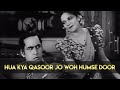
Indian films and posters from 1930: film (Jawaani Ki Hawa)(1959)
------------------------------------------------------------------------------------------------------------------------------------------------
film (Jawaani Ki Hawa)(1935)
Jawani Ki Hawa 1935 (1) Banner Bombay Talkies Ltd. Producer Himanshu Rai ... Pakshiraj 1959 (18) Banner Vijay Films Producer J. S. Casshyap Director S. N. ..

Jawani Ki Hawa movie still (1935)
Français : Devika Rani et Najmul Hasan à la fenêtre du wagon dans Jawani Ki Hawa (1935)
(from
left) Kamal Amrohi, Josef Wirsching, Meena Kumari and assistant
cameramen while shooting in Kashmir for Kamal Pictures’ production ‘Dil
Apna Aur Preet Parai’ (1959).
Josef Wirsching was an up-and-coming cinematographer in Germany in the early 1930s. As the Nazis were tightening their grip on the industry, India was coming into its own as a film-making nation. Wirsching had enjoyed working here in 1925, shooting the Indo-German silent film Prem Sanyas (The Light Of Asia) with actor Himanshu Rai.
In 1934, Rai and his wife, actor Devika Rani, founded their own studio, Bombay Talkies, eager to put to use what they had learnt on their visits to the German film industry. They also knew that an infusion of foreign talent would distinguish their productions from local competitors. So they invited Light Of Asia director Franz Osten, who brought down his team: Wirsching, production designer Karl von Spreti, lab technician Wilhelm Zolle. They joined the ranks of other émigrés seeking refuge from fascism in India: writer Willy Haas; Walter Kaufmann, composer of the All India Radio theme; Paul Zils, who helped grow non-fiction film in the country.
The Wirschings—Josef and his wife, Charlotte—settled down in Mumbai. Their lives took a difficult turn when World War II broke out. Josef Wirsching, a German national, was held in internment camps in Ahmednagar, Dehradun and Satara. In her programme note for an exhibition of Wirsching’s photographs at Serendipity Arts Festival in 2017, film historian and college professor Debashree Mukherjee writes of a photograph from the Dehradun camp of Josef drawing for his infant son.

Devika Rani and Najmal Hussain in a publicity still for ‘Jawani Ki Hawa’.
As their star director of photography, Wirsching shot several seminal Bombay Talkies productions. He’s also credited with bringing German expressionism—characterized by heavy shadows and dramatic compositions—to Indian cinema. In the 1935 thriller Jawani Ki Hawa, Mukherjee writes, “Wirsching composed frames with huge pools of darkness, sharp highlights, eerie shadows, distorted angles, and sets which appear to overwhelm the humans. In his next few films for Bombay Talkies, Wirsching frequently framed characters through arches, doorways, and windows; favored eccentric camera angles; and masterfully molded light to create shadows and pools of darkness."
His expressionist style found its ideal showcase in Kamal Amrohi’s 1949 film Mahal. The Gothic narrative gave him the chance to use shadows and canted angles; a look that would also influence the India noir films of the 1950s. Madhubala’s entry scene is a classic, but the whole film is really a tour de force of feverish photography. V.K. Murthy, a production assistant on that film, must have been taking notes; he later created similar Gothic magic on the Guru Dutt production Sahib Bibi Aur Ghulam (1962). Wirsching died in 1967, before the completion of his sole colour film, Amrohi’s Pakeezah (1972), shot in CinemaScope and Eastmancolor, a landmark of romantic excess.

Devika Rani and others in a publicity still for the Bombay Talkies production ‘Jawani Ki Hawa’ (1935).
On YouTube you will find several films shot by Wirsching, though the
prints don’t do justice to his artistry. His legacy has been kept alive
by his grandsons, Josef and Georg. In 2017, they organized an exhibition
of stills from his films and photographs taken by him, at the
Serendipity Arts Festival in Goa. You can also see the photographs
online, on the Wirsching Archive website (Wirschingarchive.com). There’s
Ashok Kumar as a smouldering, shirtless romantic star; Devika Rani
lighting a cigarette between takes; Helen sharing a laugh on set with
Josef and Charlotte; a charged still of Rani and Najmal Hussain,
rumoured to be in love in real life, standing in a train compartment in Jawani Ki Hawa. It’s a whole forgotten world of glamour.
A Cinematic Imagination: Josef Wirsching And The Bombay Talkies will show at Lalit Kala Akademi, Chennai, from 20 July.

Devika Rani in a scene from ‘Nirmala’.

Devika Rani taking a cigarette break during filming for the Bombay Talkies production ‘Izzat’ (1937).

Ashok Kumar in a publicity still for the Bombay Talkies production ‘Nirmala’ (1937).

The premiere of ‘Jawani Ki Hawa’ at Imperial theatre, Bombay, 1935.

Nigar Sultana and Josef Wirsching in a candid moment, 1950.
=============================================================================
film (Jawaani Ki Hawa)(1935)
List of Bollywood films of 1935 - Wikipedia
| Title | Director | Cast | Genre | Notes | ||
|---|---|---|---|---|---|---|
| 1935 | ||||||
| Farebi Duniya | J. P. Advani | Zebunissa, Sardar Akhtar, Navin Yagnik, Mohini, Bhawanilal, Ganpat Bakre, Bibijan | Social | Golden Eagle. Music: Sunder Das Bhatia, A. C. Biswas Lyrics: | ||
| Fashionable India | Mohan Sinha | Pushpa, Jeevan, Sushila, Badri Prasad, Shyam Sunder, Wadilal, Dhanjit Shah, Gulab, R. D. Shukla, Fakir Mohammed, B. L. Ganju | Social | Krishna Film. Music: Badri Prasad, Master Madhavlal Damodar Lyrics: Badri Prasad | ||
| Gaibi Gola | Vithaldas Panchotia | Khalil, Sheela Devi, Vithaldas, Baby Noor Jehan | Fantasy | Madan Theatres. Music: J. A. Khan Lyrics: | ||
| Ghar Jamai | Homi Master | Heera, Ghulam Rasool, Ali Miya, Jumuna, Syed Ali, Jamshedji, Amoo, Baby Noor Jehan | Social Comedy | Premier Cinestone. Music: Lyrics: Munshi Sagar Hussain | ||
| Gulshan-E-Alam | Nanubhai Vakil | Zubeida, Sardar Mansur, Shahzadi, Yusuf Effendi, Bhai Desa, Dinkar | Costume | Mahalaxmi Cine. Music: Dinkar S. Bidkar Lyrics: Lalchand Falak | ||
| Himmat-E-Mardaa.k.a. Lord Of The Jungle | G. P. Pawar | Lalita Pawar, Bhagwan, Chandra Rao, Kadam, Shyam Rao, G. P. Pawar | Action | Chandra Art. Music: Amir Husein Khan Lyrics: Samir | ||
| Hind Kesari | Homi Wadia | Husn Bano, Sardar Mansur, Dilawar, Gulshan, Jal Khambata, E. Tarapoe | Action | Wadia Movietone. Music: Master Mohammed Lyrics: Joseph David | ||
| Hunterwalia.k.a. The Lady With The Whip | Homi Wadia | Fearless Nadia, John Cawas, Boman Shroff, Sharifa, Gulshan, Sayani Atish, Jaidev, Master Mohammed | Action | Wadia Movietone. Music: Master Mohammed Lyrics: Joseph David | ||
| Ishrat Ki Maut a.k.a. 100 Lashes | M. Murtaza | Vasantrao Pehalwan, Menaka, Dilara | Music: Lyrics: | |||
| Jadui Dandaa.k.a. Magic Wand | Dwarka Khosla | Shiraz, Champa, Gulbanu, Razak, Kazi, Pandit, Dalpatram, Adam Sandow, Bibijan | Fantasy | Paramount Studio. Music: Lyrics: | ||
| Jahanara | F. R. Irani | Jahanara Kajjan, Yusuf Effendi, Violet Cooper, Sheela, Rajkumari, Pirjan, Jagdish Sethi, Mustafa, Pearl | Social | Madan Theatres. Music: Chhailaram Solanki Lyrics: | ||
| Jane Alama.k.a. Jan-E-Alam Anjumanara | M. R. Kapoor | Master Vithal, Putlinai, Athavale, Miss Pokhraj, P. Varne, Azurie, Nurjahan | Historical | B. K. Dave Brothers. Music: Dinkar S. Bidkar Lyrics: | ||
| Jawani Ka Nasha | F. R. Irani | Patience Cooper, Khalil, Akhtaribai Faizabadi(Begum Akhtar), Qaiser, Agha Jani | Social | Madan Theatres Ltd. Music: Chhailaram Solanki Lyrics: Agha Hashr Kashmiri | ||
| Jawani Ki Hawa | Franz Osten | Devika Rani, Najmul Hussain, Chandraprabha, J. S. Kasshyap, P. F. Pithawal, Kamta Prasad, Bhaskar Dev, Talpade, Azurie, Sunita Devi, Solanki, Khosla, Mukherjee, Masiha | Romantic crime thriller | Bombay Talkies. First film of Saraswati Devi as MD.[1]Music: Saraswati Devi, Najmul Hussain, Bare Agha Lyrics: J. S. Kashyap, Najmul Hussain, | ||
| Jawani Ki Hawa | Franz Osten | Devika Rani, Najmul Hussain, Chandraprabha, J. S. Kasshyap, P. F. Pithawal, Kamta Prasad, Bhaskar Dev, Talpade, Azurie, Sunita Devi, Solanki, Khosla, Mukherjee, Masiha | Romantic crime thriller | Bombay Talkies. First film of Saraswati Devi as MD.[1]Music: Saraswati Devi, Najmul Hussain, Bare Agha Lyrics: J. S. Kashyap, Najmul Hussain, |
Anwar - Osianama
Showing 46 Films, from 536 artworks. Jawani Ki Hawa 1935 (1) Banner Bombay Talkies Ltd. Producer Himanshu Rai Director ...
ssb of film Jawani Ki Hawa 1935 directed by featuring Devika Rani Kishori Lal Manika Rikh Najam ul Hassain, Anwar Bhaskar Deo Chandra Prabha J. S. .
Song Synopsis Booklet Jawani Ki Hawa 1935; India
Producer Bombay Talkies Ltd., Himanshu Rai
Director Franz Osten
Select Cast Devika Rani, Kishori Lal, Manika Rikh, Najam ul Hassain, Anwar, Bhaskar Deo, Chandra Prabha, J. S. Casshyap & Kamta Prasad
Artworks. Showing 17 Films, from 52 artworks. ... J. L. Freer Hunt. Jawani Ki Hawa 1935 (1) Banner Bombay Talkies Ltd. Producer Himanshu Rai Director ...


Jawani Ki Hawa movie still (1935)

Français : Devika Rani et Najmul Hasan à la fenêtre du wagon dans Jawani Ki Hawa (1935)
A romantic crime thriller. Kamala elopes on her
wedding day with her childhood friend Ratanlal. Her father Manganlal
chases the couple and catches them on a train. His furious exchanges ...
See full summary »
Director:
Franz OstenStars:
Devika Rani, Najmul Hussain, Chandraprabha | See full cast & crew »Cast
| Cast overview: | |||
| Devika Rani | ... | Kamala | |
| Najmul Hussain | ... | Ratanlal | |
| Chandraprabha | |||
| Kamta Prasad | |||
| J.S. Casshyap | |||
| P.F. Pithawala | |||
| Talpade | |||
| Bhaskar Dev | ... | Sukhdev | |
| Mukherjee | |||
| Azoorie | |||
| Sunita Devi | |||
| Solanki | |||
| Masiha | |||
| Khosla | |||
Edit
Storyline
A romantic crime thriller. Kamala elopes on
her wedding day with her childhood friend Ratanlal. Her father Manganlal
chases the couple and catches them on a train. His furious exchanges
with Ratanlal are interrupted by gunfire and in the mysterious gloom of
the evening a body is thrown off the train. The suspects are Ratanlal,
who cannot furnish an alibi, Kamala, who insists on being the murderess,
ex-convict Sukhdev, who confesses to the murder claiming robbery to be
the motive, and the lunatic Tarachand, who also admits his guilt.
Written by
Sujit R. Varma
Plot Summary
|
Add Synopsis
Parents Guide:
Add content advisory for parents »
Edit
See full technical specs »
Details
Language:
HindiAlso Known As:
Leichtsinn der Jugend See more »Company Credits
Show more on
IMDbPro »
Technical Specs
Runtime:
Sound Mix:
MonoColor:
Black and WhiteAspect Ratio:
1.37 : 1
Jawani Ki Hawa (1935) cast and crew credits, including actors, actresses, directors, writers and more.
Jawani Ki Hawa (Franz Osten) – Info View – Indiancine.ma
(Murugadasa) 1935. Markandeya (Murugadasa, K. Ramnoth) 1935. Bahen Ka Prem (J.K. Nanda) .... Alternative Title: Jawani Ki Hawa. Country: India, Germany
BT “Jawani Ki Hawa” 1935 – Wirsching Archive
BT “Jawani Ki Hawa” 1935.
Movies. Share: 1 of 24. details. show thumbnails. Created with Snap w.
Hey there,. I'm Georg Wirsching — a professional Artist and ...
Hindi Film Songs - Jawani Ki Hawa (1935) | MySwar
Jawani Ki Hawa (1935)
by Saraswati Devi, JKH - Complete information including lyricist,
singers and other credits, ratings and user and critic reviews,
complete ..
Song Listing |
| Ankhiyan Mori Rain Ki Jaagin | |||||||
|
|
||||||
| Ishq Ki Manzil Sehal Humdam Nahin | |||||||
|
|
||||||
| Sakhi Ri Mohe Prem Ko Saar Bata De | |||||||
|
|
||||||
| Ughadiya Ur Dwar Aaj Gaavo Saaheladi | ||||||
|
|
|||||
| Mere Dil Ka Kanwal Kamla Tum Ho | |||||||
|
|
||||||
| Main Mil Jaoon Tujhse Yahi Justaju Hai | |||||||
|
|
||||||
| Jo Joru Teri Khoobaroo Khush Ada Hai | |||||||
|
|
||||||
| Kya Kahen Tumse Miyaan | |||||||
|
|
||||||
| Ik Baat Tumhen Batlata Hoon | |||||||
|
|
||||||
Jawani Ki Hawa (1935) | Hindi Movie Review, Songs, Trailer ... - MuVyz
Complete information on bollywood movie: Jawani Ki Hawa Star cast, Movie Rating, Reviews, Plot, Screenshots, Song listing-9 no audio/video, Trailer, Watch Movie link and .
............................................................................................................................The German who changed Hindi cinema
2 min read . Updated: 13 Jul 2019, 10:00 AM IST Uday Bhatia- An upcoming exhibition pays tribute to Bombay Talkies cinematographer Josef Wirsching
- His work on ‘Mahal’ and ‘Pakeezah’ influenced a generation of cinematographers
(from
left) Kamal Amrohi, Josef Wirsching, Meena Kumari and assistant
cameramen while shooting in Kashmir for Kamal Pictures’ production ‘Dil
Apna Aur Preet Parai’ (1959).Josef Wirsching was an up-and-coming cinematographer in Germany in the early 1930s. As the Nazis were tightening their grip on the industry, India was coming into its own as a film-making nation. Wirsching had enjoyed working here in 1925, shooting the Indo-German silent film Prem Sanyas (The Light Of Asia) with actor Himanshu Rai.
In 1934, Rai and his wife, actor Devika Rani, founded their own studio, Bombay Talkies, eager to put to use what they had learnt on their visits to the German film industry. They also knew that an infusion of foreign talent would distinguish their productions from local competitors. So they invited Light Of Asia director Franz Osten, who brought down his team: Wirsching, production designer Karl von Spreti, lab technician Wilhelm Zolle. They joined the ranks of other émigrés seeking refuge from fascism in India: writer Willy Haas; Walter Kaufmann, composer of the All India Radio theme; Paul Zils, who helped grow non-fiction film in the country.
The Wirschings—Josef and his wife, Charlotte—settled down in Mumbai. Their lives took a difficult turn when World War II broke out. Josef Wirsching, a German national, was held in internment camps in Ahmednagar, Dehradun and Satara. In her programme note for an exhibition of Wirsching’s photographs at Serendipity Arts Festival in 2017, film historian and college professor Debashree Mukherjee writes of a photograph from the Dehradun camp of Josef drawing for his infant son.

As their star director of photography, Wirsching shot several seminal Bombay Talkies productions. He’s also credited with bringing German expressionism—characterized by heavy shadows and dramatic compositions—to Indian cinema. In the 1935 thriller Jawani Ki Hawa, Mukherjee writes, “Wirsching composed frames with huge pools of darkness, sharp highlights, eerie shadows, distorted angles, and sets which appear to overwhelm the humans. In his next few films for Bombay Talkies, Wirsching frequently framed characters through arches, doorways, and windows; favored eccentric camera angles; and masterfully molded light to create shadows and pools of darkness."
His expressionist style found its ideal showcase in Kamal Amrohi’s 1949 film Mahal. The Gothic narrative gave him the chance to use shadows and canted angles; a look that would also influence the India noir films of the 1950s. Madhubala’s entry scene is a classic, but the whole film is really a tour de force of feverish photography. V.K. Murthy, a production assistant on that film, must have been taking notes; he later created similar Gothic magic on the Guru Dutt production Sahib Bibi Aur Ghulam (1962). Wirsching died in 1967, before the completion of his sole colour film, Amrohi’s Pakeezah (1972), shot in CinemaScope and Eastmancolor, a landmark of romantic excess.

A Cinematic Imagination: Josef Wirsching And The Bombay Talkies will show at Lalit Kala Akademi, Chennai, from 20 July.


Cast:-
.............................................
Azurie, item girl of 1930s in Indian cinema
Video: Azurie performing in 1944 film ‘Rattan’:
Azurie being the first dancer to gain immense popularity in Hindi films. In addition to being a very popular vamp dancer, she also acted as the role model to the dancers who followed her steps in the Indian cinema. Her banner year was 1935 in which she had danced in at least 14 films. Azurie’s last film Bahana (1960) was the last film in India. She had also danced in some Pakistani films including Jhoomar (1959).

Films featuring Azurie:
- 1934 – Nadira and Noor Mahal
- 1935 – Bahen Ka Prem, Bal Hatya, Jane Alam (Anjumanara), Jawani Ki Hawa, Judgement of Allah, Katl-E-Am, Mard-E-Maidan, Pardesi Saiyan, Raat Ki Rani, Raj Tarang, Rangila Nawab, Ratan Manjari, Shahi Lutera, Stree Dharma
- 1936 – Baghi Sipahi, Country Girl, Janbaz Malika, Lagna Bandhan, Matwali Jogan, Maya, Noor E Wahadat, Sunehra Sansar,
- 1939 – Mera Watan
- 1940 – Jai Swadesh
- 1941 – Naya Sansar
- 1942 – Kaljug, Nai Duniya, Return of Toofan Mail, Sheikh Chilli
- 1943 – Tasveer
- 1944 – Rattan
- 1945 – Chhamia, Lakharani, Pannadai
- 1946 – Magic Cap, Shahjehan, Talwarwala
- 1947 – Faisla, Hatimtai, Parwana
- 1960 – Bahana

.............................................
Chandraprabha is an actress, known for Badaltey Rishtey (1978), Jawani Ki Hawa (1935) and Bachpan (1945)
.............................................
Kamta Prasad - IMDb
Kamta Prasad, Actor: Achhut Kanya. Kamta Prasad is an actor, known for Achhut Kanya (1936), Jawani Ki Hawa (1935) and Jeevan Naya (1936).
.............................................
P.F. Pithawala - IMDb
P.F. Pithawala, Actor: Achhut Kanya. P.F. Pithawala is an actor, known for Achhut Kanya (1936), Kangan (1939) and Punar Milan (1940).
.............................................
Sunita Devi - IMDb
Sunita Devi, Actress: Achhut Kanya. Sunita Devi is an actress and producer, known for Achhut Kanya (1936), Jawani Ki Hawa (1935) and Balika Badhu (1967 ).
Sunita Devi
Real Name – Maria Brontis
Profession – Actress
Most Active/Popular Decades – 1930s
Religion – Christian
Ethnicity – Hungarian
Date of Birth – N/A
Date of Death – N/A
Debut Film – Perhaps Apsara Urvashi (1931)
Last Film – Perhaps Madari Mohan (1940)
Significant others in the Film Industry – N/A
Miscellaneous Info – Sunita Devi whose real name was Maria Brontis was a Hungarian. She had some stage and screen experience in Germany and a long career in Indian films.
Related Youtube Video – N/A
Profession – Actress
Most Active/Popular Decades – 1930s
Religion – Christian
Ethnicity – Hungarian
Date of Birth – N/A
Date of Death – N/A
Debut Film – Perhaps Apsara Urvashi (1931)
Last Film – Perhaps Madari Mohan (1940)
Significant others in the Film Industry – N/A
Miscellaneous Info – Sunita Devi whose real name was Maria Brontis was a Hungarian. She had some stage and screen experience in Germany and a long career in Indian films.
Related Youtube Video – N/A
Aug 11, 2013 - Uploaded by Shalin Bhatt
Image: Sunita Devi, a Christian Hungarian actress who starred in many films during the 1930s-1940s. Any ................................................
Solanki (I)
.............................................
J.S. Casshyap - IMDb
Casshyap is a writer and actor, known for Achhut Kanya (1936), Nine Hours to Rama (1963) and Mem Sahib (1956).
https://indiancine.ma/CAN/info
Dec 10, 2001
Director: Franz Osten; Writer: Niranjan Pal, J.S. Casshyap; Producer: Rajnarayan ... Editor: Dattaram N ...
https://indiancine.ma/CQJ/info
Director: Franz Osten; Writer: J.S. Casshyap; Producer: Himansu Rai; Cinematographer: Josef ...
https://indiancine.ma/BXG/info
... Himanshu Rai; Cinematographer: Josef Wirsching; Editor: D.N. Pai; Cast: Devika Rani, Ashok Kumar ...
Dec 30, 2013
Director: Amiya Chakrabarty; Writer: Amiya Chakrabarty, J.S. Casshyap; ... Cinematographer: R.D. Mathur ...
Nov 2, 2018 - Uploaded by Bombay Talkies
A sneak peak of the Bombay Talkies Studios.
... R.D. Parineeja; Editor: Dattaram N Pai; Cast: Leela Chitnis, Ashok Kumar, Shah Nawaz, V H Desai, ... The ...
Jan 8, 2013
Director: S.S. Vasan; Writer: Pandit Indra, J.S. Casshyap; Producer: S.S. Vasan; Cinematographer: Kamal ...
Jun 17, 2018 - Uploaded by Shalin Bhatt
Writer J.S. Casshyap (dialogue), Niranjan Pal ... Cast Devika Rani (Uma), Mumtaz Ali (Nandlal ...