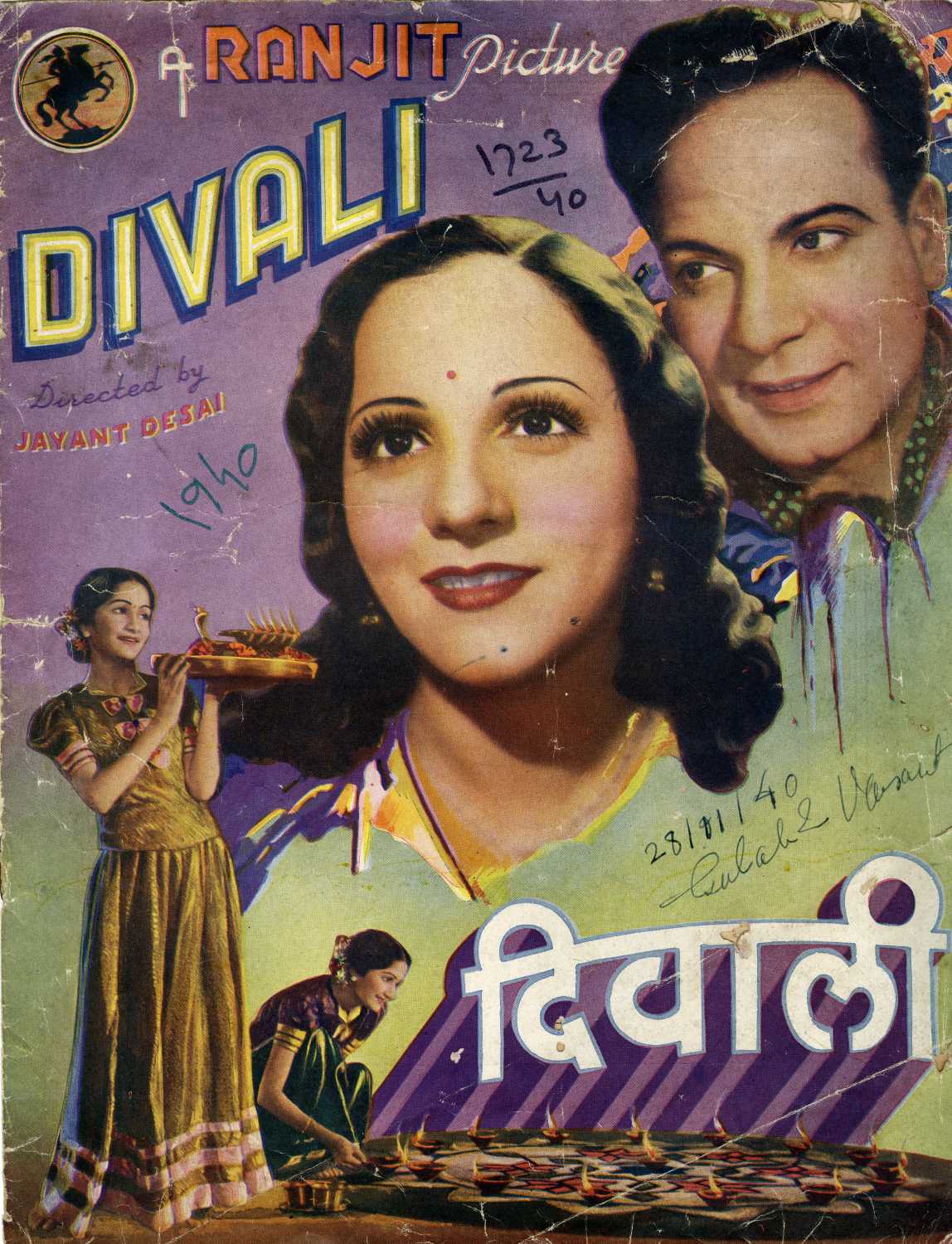
| Divali | Jayant Desai | Motilal, Madhuri, Ishwarlal, Vasanti, Keshavrao Date, Dixit, Indubala, Suresh, Kesari, M. Bhagwandas | Social | Music: Khemchand Prakash Lyrics: Pyare Lal Santoshi, D. N. Madhok, and Pandit Sudarshan |
Most Anticipated
Director:
Jayant DesaiStars:
Madhuri, Motilal, Vasanti | See full cast & crew »Cast
| Cast overview: | |||
 |
Madhuri | ... | Rekha |
 |
Motilal | ... | Dr. Kailas |
| |
Vasanti | ... | Tulsi |
| |
Ishwarlal | ... | Rangilal |
| |
Keshavrao Date | ... | Dhanna |
| |
Dixit | ... | Pohomull |
| |
Indubala | ... | Chandkumari |
 |
Suresh | ... | Sudhir |
| |
Kesari | ... | Jitu (as Keshari) |
| |
M. Bhagwandas | ... | Judge (as Bhagwandas) |


Details
Country:
IndiaLanguage:
HindiAlso Known As:
The Festival of Lights See more »Company Credits
Technical Specs
Sound Mix:
MonoColor:
Black and White7 songs:-


[New post] Ye bade sahab ka topaa hai

| Apr 22, 2022, 5:01 AM (1 day ago) |  | ||
| ||||
|


Let us now listen to the duet of Vasanti and Suresh.
Song- Ye bade sahab ka topa hai (Diwali)(1940) Singer- Vasanti, Suresh, Lyricist- Not known, MD- Khemchand Prakash

Lyrics
Ye bade sahab ka topa hai
ye memsaab ka baja
Ye bade sahab ka topa hai
ye memsaab ka baja
ye dholak Natthu dhobi ki
ye Kalkatte ka Raja
ye dholak Natthu dhobi ki
ye Kalkatte ka Raja
Ye bade sahab ka topa hai
ye memsaab ka baja
Ye bade sahab ka topa hai
ye memsaab ka baja
ye dholak Natthu dhobi ki
ye Kalkatte ka Raja
ye dholak Natthu dhobi ki
ye Kalkatte ka Raja
Raja ke ghar saab aaya
gitpit gitpit boley
Raja ke ghar saab aaya
gitpit gitpit boley
Raja Rani pade soch mein
kaun kiwaade kholey
Raja Rani pade soch mein
kaun kiwaade kholey
Natthu dhobi aaya re
Natthu dhobi aaya re
sang mein dholak laaya re
sang mein dholak laaya re
dhanak dhanak dhan dhanak dhanak dhan
dholak baaje re
dhanak dhanak dhan dhanak dhanak dhan
dholak baaje re
raja ke ghar topey waala
saath biraaje re
raja ke ghar topey waala
saath biraaje re
maange sodawater
oye
maange sodawater
Raja ?? baaje
Raja ?? baaje
maange sodawater
maange sodawater
Raja ?? baaje
Raja ?? baaje
haa aa ha ha ha ha aha
aah ha ha ha h ah
haa aa ha ha ha ha aha
aah ha ha ha h ah
haa aa ha ha ha ha aha
aah ha ha ha h ah
haa aa ha ha ha ha aha
aah ha ha ha h ah
hey
Today's song is sung by Vasanti and Suresh. Vasanti was a very well known and popular Child star. So was Suresh. However Suresh became an adult star in later years. I know of only 2 child artistes, who left the film world, though they were in great demand. First was Vasant, who got married at an appropriate age and left films. The second was Shashi Kapoor Sr. who quit a quite flourishing film career to pursue higher education. He spent his life as a Professor in an US University.
The film was made by Ranjit Movietone and was directed by Jayant Desai. Music was given by the inhouse MD- Khemchand Prakash. This was his first film with Ranjit. Before him Gyan Dutt was the resident MD who worked from 1937 to 1940. After Khemchand prakash left Ranjit, it was Bulo C Rani from 1945 onwards.
In the early era, Ranjit was one of the most powerful and famous filmmaking companies in India, boasting of famous and popular artistes on its payroll. owned by Chandulal Shah, Ranjit Movietone made,in all, 175 films during its existence. Calcutta's New Theatres, however, stands tall at No.1 with 177 films to its credit.
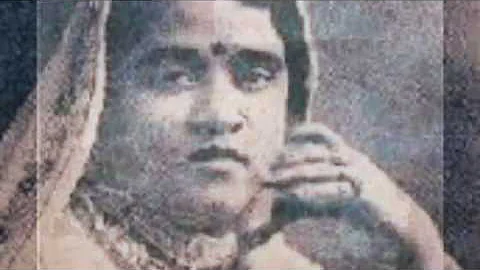
Film Diwali-1940 had 13 songs, written by D N Madhok, Pt. Sudarshan and P L Santoshi, but HFGK does not credit any song to any Lyricist. The cast of the film was Motilal, Madhuri, Ishwarlal, Keshavrao Datey, Dikshit, Indubala, Suresh, Vasanti etc.etc. The name of Indubala is a misfit. She was a Bengali and did Hindi films mainly made by Calcutta producers in Calcutta and she acted during a period from 1932 to 1949. She sang 30 Hindi songs in 14 films She acted in 33 Hindi films. In most films, she did comic roles. Even in this film she is paired with comedian Dikshit ( of the Ghori-Dikshit pair of the 1930s films). Here is Indubala's Biodata based on an article by Dr, J.P.Guha, with thanks to him.
SHASHI KAPOOR(SENIOR)

Last year when we placed an order for the film Bhakt Dhruv (1947), we were amused to see the name Shashi Kapoor in the cast list of this mythological film. We checked online and found this title listed with films like Sharmilee (1971) and Deewaar (1975) in the same filmography on various sites like IMDB. However when we received the film’s VCD, the little boy on the cover looked nothing like the youngest son of actor Prithviraj Kapoor we had seen in films like Aag (1948) and Awaara (1951). Curious, we started watching the film and soon realized that this indeed was a different child actor. He won us over with his demure and subtle performance. In quick succession we happened to watch Shaheed (1948) where he played young Dilip Kumar and Samadhi (1950) where he played the youngest brother of actors Shyam & Ashok Kumar.
Our curiosity about this actor was increasing; every time we saw the song “Prabhu Apni Jhalak Dikhao” we would wonder if we will ever know about this boy. After searching for long we came across his profile on Cineplot where he was identified as Shashi Kapoor (Senior) and seemed to have his accurate filmography. Fortunately this June, Shashi Kapoor ji came forward to acknowledge Cineplot for listing his filmography correctly when someone brought the site to his notice. To our joy he agreed to communicate with us and share his journey. This post is an essence of our email exchanges with him.
 Kapoor Family in 1971 (left to right) : Fateh Chand Kapoor (father), two friends, Shashi Kapoor, Ravi Kapoor (brother), Kushalia Kapoor (mother), friend, Geeta Kapoor (sister-in-law), (in front) two nieces & nephew
The Journey Thus Far
Shashi ji was born to Kushalia and Fateh Chand Kapoor on 7th September, 1934 in the then Bombay. His full name is Shashi Chand Kapoor (शशिचंद कपूर). His father was a film producer who made four films with Laxmidas Anand – Sawaal (1943), Lady Doctor (1944), Krishna Leela (1946) and Faisla (1947). His elder brother Ravi Kapoor (Ravi Chand Kapoor) was a celebrated story & screenplay writer and the legendary singer, Mahendra Kapoor was his cousin. Currently well known brothers Siddharth Roy Kapur (CEO, UTV Motion Pictures), Kunaal Roy Kapur (Actor / Director) and Aditya Roy Kapur (Actor) are grandchildren of his maternal aunt.
 His film career started in 1943 on the sets of Lady Doctor (1944) and continued till his last release Bhagwat Mahima (1955). After completing graduation in 1955, he gave up acting for his love for Mathematics and lure of teaching. He then completed M. Sc. (1957) and LL.B. (1963) from Bombay University. During this time, he worked as lecturer in Wilson College, Bombay (1958), State Bank of India (1958-61) and lecturer in Kirti College, Bombay (1961-63). He moved to Michigan, United States in 1963 and joined Michigan State University to undertake doctoral work in Mathematics. He worked as Teaching/Graduate Assistant in Michigan State University (1963-67) while completing his Ph.D. Mathematics (1967). He took US Citizenship in 1976. From 1967 to 1996, he worked as a faculty member in Western Michigan University (WMU) and retired as professor emeritus in January, 1997.
Today, Shashi ji is leading a peaceful retired life at his US residence. He says he is satisfied with the acting career he had, he has no regrets for leaving it for his first love, Mathematics. He has enjoyed every minute of the 37 years he spent in teaching the subject.
Film Career
In 1943, Fateh Chand ji’s film Lady Doctor (1944) was under production and Shashi ji would often visit the sets to see the shoot. One day they were filming a hotel scene when they fell short of people. Since Shashi ji was already on the set, he was readied to play a few seconds cameo and thus made his first screen appearance at the age of 9. Later the artist-supplier mentioned that Sohrab Modi was looking for a young boy to play a small part with Mehtab in his next film. After an interview with Sohrab ji, he got his first speaking role in Parakh (1944).
FILMOGRAPHY
TITLE / LEADING ROLES – Bhakt Dhruv (1947), Bhakt Gopal Bhaiya (1948), Veer Babruvahan (1950), Murliwala (1951)
 SMALL / MEDIUM ROLES – Meena (1944), Bachpan (1945), Tadbir (1945), Dr. Kotnis Ki Amar Kahani (1946), Renuka (1947), Shaheed (1948), Ram Darshan (1950), Samadhi (1950), Mordhwaj (1952), Sanskar (1952), Daana Paani (1953)
CAMEO / GUEST ROLES – Lady Doctor (1944), Parakh (1944), Sati Ahilya (1949), Maha Pooja (1954), Parvati Vivah (1954), Bhagwat Mahima (1955)
His film career had now taken off; Producers and Artist-Suppliers started approaching him with roles. He and his parents would go through the details before accepting any part. For him acting in movies was a hobby and to keep up with different requirements for roles, he did basic training in fencing, horse riding, dancing, etc. In his decade long film career, Shashi ji worked in 21 films with some of the best talents in the industry then, on and off screen.
 His most favorite directors were Shantikumar Dave (credited as Shanti Kumar) and Ramesh Saigal. Shashi ji remembers them very fondly as wonderful gentlemen and great people to work with. He worked with them in three films each – Bhakt Dhruv (1947), Bhakt Gopal Bhaiya (1948) & Maha Pooja (1954) were directed by Shanti Kumar and Renuka (1947), Shaheed (1948) & Samadhi (1950) were directed by Ramesh Saigal.
Shanti Bhai often told him that he should become a character actor like Chandramohan (Watal) (played his father in Shaheed (1948)), but that was not meant to be. By the time he turned 18, Shashi ji started moving away from films having chosen a different career path. After 1952, he did very few films like Maha Pooja (1954), Parvati Vivah (1954) and Bhagwat Mahima (1955) where he had small guest roles. He mainly participated in these films as a mark of respect to the producers and directors of his past films. It took a while for the word to spread that he had given up acting and offers continued to come even after he left for US.
Legend of Bhakt Dhruv (as we have read and understood)
Bal-Bhakt Dhruv was just 5 years old when he set out in search of Lord Vishnu. Once when little Dhruv tried to sit on his father’s lap his step-mother pushed him aside. Dhruv told his mother about what had happened. She told him that Lord Vishnu is the father of entire mankind and if he prayed hard to him, he will surely let him sit on his lap and shower him with love. Dhruv meditated and underwent severe penance. He forced Lord Vishnu to appear in his divine form with his devotion and dedication. Lord Vishnu not only let Dhruv sit on his lap and showered him with love; he also gave him a permanent/fixed place in the sky as the Pole Star (Dhruv Tara).
Being Bhakt Dhruv
Just like Satyajeet Puri is Bhakt Prahlad, Vishnupant Pagnis is Sant Tukaram, Arun Govil is Shri Ram to us; similarly Shashi ji is our Bhakt Dhruv. Whenever there is a mention of this bal-bhakt, we can only see him singing “Prabhu Apni Jhalak Dikhao” to Lord Vishnu. Bhakt Dhruv (1947) is a Prakash Pictures production; produced by brothers Vijay Bhatt & Shankar Bhatt (of Ram Rajya (1943) fame), directed by Shanti Kumar, music by Shankar Rao Vyas and lyrics by Pt. Indra & Pt. Moti.
 Shashi ji says this was a fun project as shoots felt like play time. The offer came from Prakash Pictures and after a few interviews he was chosen for his first leading role. He did not feel much difference between this mythological role or otherwise and got used to the costumes very quickly. Shanti Bhai and his assistants would make the cast aware of the daily activity schedule; while much was routine, they were very careful in scenes that would be tedious like – being submerged in water up to the nose, sliding along pulleys and wires from one end to the other or the scene involving live snakes including the one around his neck. The other cast members like Jeevan, Mridula, Shanta Rin, Leela Mishra and Laxman (who played his brother Uttam) were a great company, like family on the sets.
One of the most memorable (our favourite) sequences of the film is where actor Shri Bhagwan ji appears as Bhagwan Vishnu in front of Dhruv as he sings “Prabhu Apni Jhalak Dikhao” (sung by Mohantara Talpade). It is interesting to know that this sequence had no computer generated shenanigans; everything was shot in real time using lighting angles, shielding the actor with cut-outs, etc. It took time but the end result was visually very effective. During our initial interaction we realised that Shashi ji had not seen any of his own films in decades, so we shared a youtube link of this song. On being asked how it felt, he said – “How did it feel? Strange, like who is that kid?“
Memories
Shashi ji shared some interesting trivia. In Dr. Kotnis Ki Amar Kahani (1946) he played Pandurang Kotnis, younger brother of the famous Dr Dwarkanath Shantaram Kotnis (Dr. DS Kotnis) and a few years later acted in his wife Kamla Kotnis‘ production Sati Ahilya (1949) in a cameo as Shri Ram. He still finds it amusing that he got an opportunity to work with a man he once played onscreen. Kamla ji used to do his makeup herself. He says lead and character actors were just phenomenal then, in spite of success they remained simple human beings, never looking down on the small actors. Meeting icons like the man with a booming, sharp and crystal clear voice, Sohrab Modi, the perfectionist V. Shantaram, the ever so gentle Dadamoni (Ashok Kumar), the beautiful Kanan Devi, the very humble Dilip Kumar, among others are part of his cherished memories.
About Ravi Kapoor Ravi Chand Kapoor (credited as Ravi Kapoor) was a successful story and screenplay writer. This eldest son of Kushalia and Fateh Chand Kapoor was born on 31 December, 1926 in Amritsar. Since childhood he was always interested in reading and writing. Shashi ji recalls their routine as kids to read 16 comics everyday (!!!) which they rented from their local library. He completed his BA from the University of Bombay (Ismail Yousuf College, Jogeshwari) in languages including English, Persian and Arabic. He was married to Geeta, daughter of yesteryear character actress, Gulab. The couple was blessed with three children; none of them are connected with films.
After completing his education, Ravi ji started his career in movies. He began with editing, produced a few movies, tried his hand at direction and then moved on to his ultimate destiny as a story & screenplay writer. He has an impressive filmography to his credit with major hits like – Nagina (1986), Khoon Bhari Maang (1988), Hum (1991), Karan Arjun (1995), Kaho Na Pyar Hai (2000), among others. He had long associations with Harmesh Malhotra & Rakesh Roshan and contributed to many of their directorial ventures. On 13 August, 2008, Ravi ji bid adieu to the world. Shashi ji remembers his lovely brother as a stout and lifelong devotee of Lord Shiva, and a gentle mild mannered person full of love for family & friends. We are glad to know a man whose work we have enjoyed for years and still do when we revisit those films. May his soul rest in peace.

Shashi ji comes across as a sweet, polite and patient person. From his pictures it can be seen that he exudes a certain calmness and serenity. Someone who is at peace with what life had to offer and the choices he made to reach where he is now. Today we admire him even more. We are thankful Shashi ji agreed to traverse down the memory lane with us. Its been a pleasure to know him and a wish fulfilled. Today on his Birthday we wish him Good Health, Peace and Happiness.
Edit
Found a new poster/booklet scan for Bhakt Dhruv (1947) thanks to Priya Lakshmi. We just had to include it here.
– Maitri Manthan
* Shashi ji has shared many tidbits on his Profile and Filmography pages on Cineplot. Some clips featuring him can be viewed on our YouTube channel.
* We would like to thank Cineplot without whom interaction with Shashi Kapoor ji would not have been possible.
* The information provided in this blog is to the best of our knowledge, if any discrepancies are found please let us know. Thank you.
INDUBALA --SINGER-1920 TO 1960
The name of Indubala is a misfit. She was a Bengali and did Hindi films mainly made by Calcutta producers in Calcutta and she acted during a period from 1932 to 1949. She sang 30 Hindi songs in 14 films She acted in 33 Hindi films. In most films, she did comic roles. Even in this film she is paired with comedian Dikshit ( of the Ghori-Dikshit pair of the 1930s films). Here is Indubala's Biodata based on an article by Dr, J.P.Guha, with thanks to him.
Indubala's mother was Rajabala, who along with sister Matibala and brother Tinkary worked in Motilal Bose's The Great Bengal Circus, also known as Bose's Circus or Professor Bose's Circus. Harimati was the eldest sister of Rajabala and had a different life. Rajabala performed mainly as a trapeze artiste and got married to Motilal Bose at a temple in Ujjain, India. At the time he was then in his forties while Rajabala was still a teenager. The marriage was never accepted as legal by Motilal's family. Motilal Bose's first wife was Mrs. Annadamohini Devi.
Indubala was born in November, 1899 at Amritsar, where the circus party had gone for performance. Indu was born premature and Dr. Bidhumukhi Basu was taken to Amritsar from Calcutta to attend Rajbala. Such was the affection and concern of the husband for his young wife. Motilal's interest in Rajbala dwindled later, supposedly because Rajbala showed no interest in going back to the circus after Indu's birth and soon she was left to fend for herself. She came to Calcutta with her daughter and was given shelter by a Jiban Krishna Ghosh, who remained loyal to her till his death and also played a major role in establishing Indubala in her life as a performer. Once in Calcutta, Rajabala trained herself as a singer and Indubala's first training in music was from her mother. The initial plan was to train Indu as a nurse and she was admitted as a trainee in a hospital in the Pataldanga locality of Calcutta. Indu did not take fancy in the job and ran away from the hospital, much to the disappointment of her mother, who never wanted her only daughter to be forced into a life of indignity.
After this incident Indubala's musical training started. Although her father ignored wife Rajabala completely, he remained fond of his daughter and kept in touch with her and often invited her to his ancestral home where he lived during his brief visits to Calcutta and sent her a monthly pocket money of Rupees twenty till his death. Indubala's first performance was at a gathering of distinguished guests where her mother was the chief entertainer. Each one of the guests appreciated Indu's singing and thus began her formal training from Gouri Shankar Mishraji. Indu was only about twelve then. This also marked the entry of Indubala into the red light world. Amongst her trainers were Kali Prasad Mishra, Elaahi Bux and Miss Gauhar Jaan. Apart from music, Miss Gauhar Jaan, credited as Prima Donna of India, Indu also learned etiquette from the elder artiste and developed a close friendship with her. This association provided Indu with valuable musical knowledge and experience.
In later years she took training from Girin Chakraborty, Kamal Dasgupta, Subal Dasgupta, Jamiruddin Khan and Kazi Nazrul Islam. In time she came to be one of the major exponents of Nazrul songs and her songs along with those of Miss Angurbala and Kamala Jharia are still referred to for authenticity of lyrics and tunes of Nazrul songs. In 1916, Indubala recorded her first songs. She was brought into the record circle by Bhagabati Charan Bhattacharya and Mr. Manindra Nath Ghosh, alias Mantababu, himself a gramophone singer of repute. The first songs published as a record were Asha Phuraye Gelo, Sindhu Khambaj and Aar Mukhey Boley Ki Hobey, Kedara. The record number was P 4306. In the beginning she did not take any money from the Gramophone Company and as such was credited in the records as Miss Indubala (Amateur). She was not the first amateur artiste of the company but enjoyed the privilege of announcing her name at the end of each song saying "My name is Indubala". The amateur status continued for a fairly long period. Later on she received Rupees two hundred per record and also received a royalty of five per cent over the sales. Her first songs of Nazrul on the disc were "Cheyona Sunayana" and "Rumjhum Rumjhum Ke Eley Nupur Paye". The record number was P 11661. To Indubala also goes the credit of being the first Bengali artiste to record Hindustani songs for the Gramophone Company. For the Indian State Broadcasting Center, later named All India Radio, Indubala first sang on the second day of the radio company's broadcasting in 1927 in Calcutta and went on singing in this medium for nearly fifty years. Over the radio, Indubala sang not only from Calcutta but from several other stations by special invitation all over India. Apart from discs and the radio, Indubala was well established by the thirties in cultural functions all over India. Frequent invitations used to come from Shahjahanpur, Pakur, Madras, Bangalore, Palanpur, Nagpur, Hyderabad, Oudh, Trivandrum, Vizagapattam, Ajmer, Coimbatore, Dacca and several other places.
In 1936 she was appointed court musician to His Highness, The Maharajah of Mysore. She received a monthly salary of Rupees two hundred and fifty and this continued till the time when the native princes faced withdrawal of privy purse. In all Indubala had recorded some two hundred and eighty songs, including about two hundred forty basic songs, the rest being from films. Indubala's first stage appearance was in The Rambagan Female Kali Theatre, established by her mother Rajabala in 1922. Both mother and daughter took part in the plays and Indubala appeared in about twelve plays in this short-lived company which lasted for only two years and in 1924 she joined Calcutta's most prestigious stage, The Star Theatre. She continued to appear on the stage mainly in singing roles and her songs were a major attraction in each of the plays. By rotation she acted in all the public theaters of Calcutta and even took part in the Hindi Parsee Theatre in 1945 and 1946, the plays being Ghar Ki Laaj and Jasoos. Her last appearance in the public stage was in the play Prithviraj in the role of Mehga at Star Theatre in 1950. Thereafter she worked in call shows till almost 1958.
Jamuna Puliney (1933) has been credited as her first film. This is probably because this was her first film contract although Ankh Ka Tara (1932) released before Jamuna Puliney. In all she acted in about forty eight films in Bengali, Hindi, Urdu, Punjabi, Tamil languages. In most of them, she had songs as a major attraction or else did comic roles as in Bengali Indira (1937) and Hindi Diwali (1940) to name a few. She did the role of Dhai Ma in both the versions of Swayamsiddha (1947). Thereafter she was not seen on the screen. As a playback singer she lent her voice in films like Alibaba (1937), Chandragupt (1934) in Hindi, Ab E Hayat (1933) in Urdu and Dil Ki Pyaas (1935) also in Urdu. She did not act in these four films. Indubala did not receive any major award apart from the Gold Disc given on behalf of His Master's Voice. The government of India never considered her name for any award. The Sangeet Natak Academy however honoured her with a lifetime achievement award in 1975. The government of West Bengal, India however did arrange for a pension for which a lot of running about had to be done.
In personal life, Indubala was most humble and polite and bold in her behavior and was never ashamed to admit or discuss her origin. Even when established as a major singing artiste with an all India fame, she refused to move out to a respectable place leaving her residence in Rambagan, a notorious red light area of Calcutta. Indubala got herself involved in voluntary work for the uplift of fallen women and worked actively for their rights in society through various organizations, which were patronized by top political leaders of the time. She had some interesting hobbies like writing poetry and collecting perfumes.
Even at old age all the empty perfume bottles were kept within her view. She was fond of jewelry too and had a great collection, either purchased or gifted by admirers. These valuables vanished when she was too unwell to keep track of them. Her contemporary artiste Miss Angurbala was a close friend with whom she confided and shared the joys and sorrows of life and this friendship lasted till the very end. Indubala adopted a nephew of her mother's friend Jiban Krishna Ghosh. The boy's name was Pranab Ghosh. This foster son did not look after her mother very much when in old age Indubala suffered from conditions like cataract and then paralytic strokes. It was Dr. Badan Sengupta who made necessary arrangements for her treatment. She could not afford nursing homes and therefore was treated at state government hospitals in all occasions of illness.
The end came on the thirtieth day of November, 1984 after a prolonged illness during which again Dr. Badhan Sengupta looked after her as his own mother. Perhaps by coincidence her friend Angurbala died the same year.